Growing up, revisited
Long ago on this blog, before I started primarily talking about software & music production, I wrote about life. One such post was titled "Growing up". I've decided it's due for a revisit — not as a progress update on my own growth, but as a re-examination of the topic from new perspectives.
> reread
"Growing up" was one of my better-written 2022 posts. I don't know what inspired me to pull out "Dunning-Kruger valley of adulthood" and "Get out of Tough Conversation Free card" in the same sentence. It's short; it's worth a read just for context's sake.
As for the behaviors I landed on, "putting in the work" and "humility & ambition", I think they passed the test of time. Just about any goal worth pursuing takes effort to realize; knowing your limits (but pushing them) helps keep that effort focused and impactful. If I were to update this post today (keeping the structure intact), I might add "choosing your battles wisely" as a third item.
But I'm not updating the original post, and listing behaviors that demonstrate personal growth isn't how I want to frame this subject anymore. Let's look at a meme instead:
> analyze
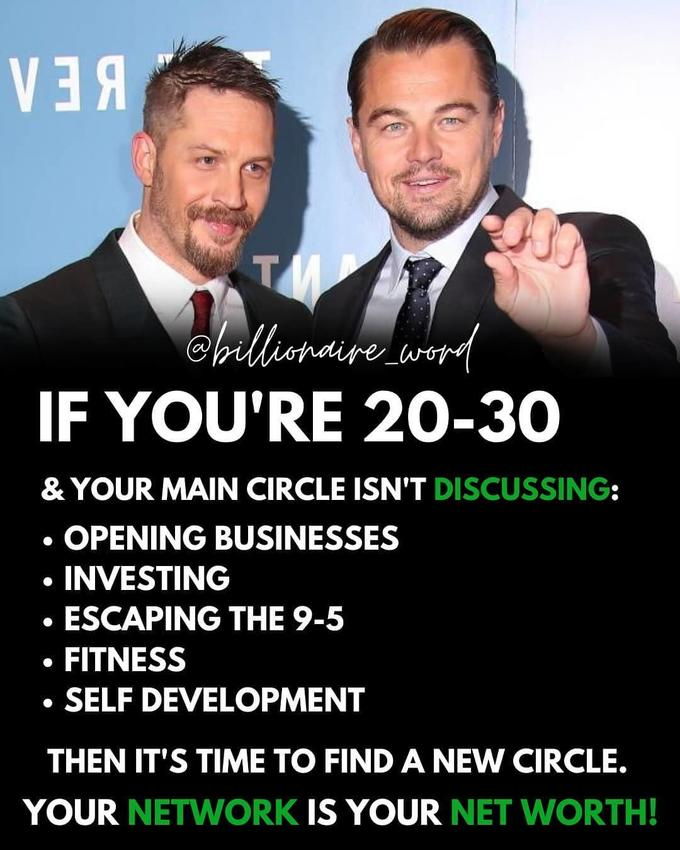
The moment this image escaped its intended audience, the Internet collectively ate it up and spat out a million ironic versions, as it well deserved. But, just for a moment, let's put ourselves into the shoes of its intended audience (young men) and outline the intended social effect:
- You are held to a standard based on the priorities and goals of your peers.
- You are expected to uphold this standard within a few years of becoming an adult.
- People who aren't concerned with these goals should be excluded from your social spheres. They're members of the out-group.
- If you do not pursue these goals, you enter the out-group.
What bothers me about the proliferation of ironic edits of this meme is that the people who share them tend to subscribe to the exact same out-grouping formula, just applied to different standards.
Indeed, you can learn a lot about your friends based on who they openly regard as members of the out-group. Who, in their minds, deserves the ridicule? Who's pushing 30 in the wrong circle? Their answer's almost certainly not "people who aren't looking to start a business", but there is an answer. You could start looking for it on social media, but if you're sufficiently neurodivergent, you've probably already absorbed a lot of your friends' out-group signifiers as a natural consequence of trying not to embarrass yourself before the panopticon.
They seem random at first, but once you've internalized enough of these out-group signifiers, the unifying logic becomes clear: they're all adults who aren't adulting right. They're lacking the necessary skills, or have the wrong hobbies or interests, or don't have the resources they're supposed to by now.
See, it's cute to be aimless or weird as a teenager, and understandable when it bleeds into your adult years. But the grace only extends so far, and you only know for sure where it terminates after it's too late. Missing that stop puts one at risk of immense social ostracization. No matter what growing up means in your social circle, your continued membership to the circle is predicated on demonstrating it.
> introspect
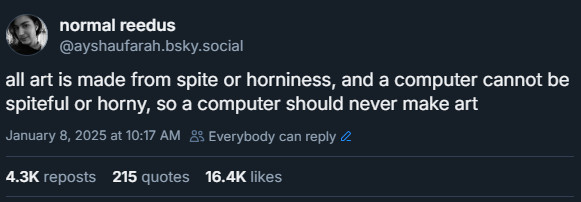
If you believe that a blog post can be art, you may be disappointed to learn that the 2022 "Growing up" post wasn't born from such noble causes as spite or horniness, but rather from shame.¹ I don't have to remember how I felt at the time — the words are drenched in it. Not that I felt any actual disdain from my friends, but I could sense the looming threat. The possibility that I might forget to be & act like an adult, stagnating in life until all of my thousand-odd Twitter followers could smell it on me. One of the easiest outs when you feel the threat of criticism is to be the first one to criticize yourself, and so that's what I did.
My priorities have changed a lot since 2022. For one, I'm no longer under the illusion that my social media follower count meant anything, ever. I'm not a public figure and I have no obligation to perform personal growth for an audience. That's not to say my goals were wrong, but the psychological underpinnings were on shaky ground. I needed a better reason to clock into life than the threat of disappointing others.
This one's more subtle, but arguably more important: I no longer regard growing up as a move toward some platonic ideal of humanity. The behaviors we commonly associate with adulthood are indeed conducive to a wide variety of goals, but they don't form a moral code. That is to say, people who don't demonstrate the kinds of personal growth that people look for aren't evil, or bad, or any other intrinsic pejorative. That line of reasoning starts with vilifying "lazy" people and ends in various flavors of fascist rhetoric, such as ableist eugenics. An extreme example, for sure, but one I'd rather distance my personal ideology from.
¹ If it wasn't obvious, this post is made out of spite, aimed in too many directions to list.
To close things out, I'd like to disentangle these concepts of "growing up" and "adulthood" from each other. I treated them as synonymous in the original post; here, I'd like to discuss the latter separately.
> reframe
Adulthood is a natural phenomenon that almost no one feels equipped for. Don't believe me? Try telling anyone in your life "I don't feel like an adult yet" and wait for them to respond with the old reliable "well, nobody does". It's a meme that the whole world is in on, and it says more about us than we give it credit for.
Growing up, in contrast, is a nebulous set of coded behaviors that are often associated with adults — responsibility, home skills, social finesse, and so on. Despite that association, children frequently embody these traits, whether of their own volition or (more likely) due to circumstances. So do many of those same adults who feel under-equipped for adulthood!
There's no contradiction here. One is a label that get assigned to you at a certain age; the other is a bunch of things that you do, often starting around that age. Nothing binds them together until we start talking about them like they're the same thing.
I'm not just being pedantic for its own sake. Conflating adulthood with growing up does people of all ages a disservice:
- For young adults, it obfuscates the effort required to put personal growth into motion, as though it's an innate part of turning 18.
- For older adults struggling to acquire growth signifiers, it makes the threat of being cast to the out-group more severe, as though they somehow failed a test that everyone else who turned 18 passed without trying.
- And as for children, this false equivalence is just one of the myriad rhetorical tools used to deny their autonomy, as though they definitionally lack some requisite skills needed to make decisions about their own lives.
Many more thousands of words could be written on the topic of children's autonomy, and perhaps someday I'll feel equipped to write that post. For now, though, let's acknowledge that being a child in the modern era is a horribly isolating experience, and instead discuss what that means for adults.
First, show kids some grace, even when they're being annoying or otherwise immature. Not only because they're adults-in-training, but because they're people, today. Frankly, I think this has every reason to be considered one of the core "growing up" behaviors. It's upsetting just how many people wear their disdain for children on their sleeves. Remember before 2025 when people would wax poetic about how much better the Internet would be if all those pesky kids got cordoned off to their own, separate Internet? Do you think any of those smarmy fuckers came to terms with the weight of their own words?
On that note, go to bat for children when it counts. If you agree that children deserve to be more than a political weapon, tell your elected leaders to oppose legislation that wields them as such. I'm not typically one to bang the "call your senators" drum, but in most jurisdictions, kids literally don't have any legal foothold to stand up for themselves. They need compassionate adults to step in.
Finally, if you struggle to empathize with the modern child, remember that you, too, were a child once. It's one of the only labels that applies to everybody in the entire world at some point! And though the chemicals that make up your being change every day, you will never Ship-of-Theseus yourself into a completely different person. As such, growing up isn't a total reinventing of the self, but rather a gradient of new experiences and responsibilities. Breaking down this dichotomy is the first step toward a healthier relationship to both adulthood and your inner child — whatever nurturing that looks like for you.
> conclude
...wait, when did the section headers turn into text adventure game prompts??
Conclusion
That's better. We don't play games on this blog; after all, I'm an adult. A normal, well-adjusted adult with regular hobbies and taste in media. Look, I write about computers! And I make things sometimes! I'll bet you've never seen a more employable adult human being in your entire life.
Jokes aside, I've wanted to revisit this topic for months, and I think I did it more justice than last time. Thanks for sticking around if you read all of that; keeping this blog's topics broad inoculates it against readers with mismatched expectations, so if you're still here, you're in the right place.